While the world watches the World Cup, we’re also watching what brands are doing with the moment. Enjoy more excellent insights from Senior Designer, Paul Lukes. — Bonfire Editorial Team
With the 2026 FIFA World Cup in full swing in the U.S., Canada, and Mexico, the usual influx of advertising related to the beautiful game has flooded all channels, as is to be expected. But there has also been an unexpected byproduct of the tournament in a new, more subversive form of advertising that has caught fire in recent days as well.
FIFA and the World Cup are massive brands, which in turn have serious revenue-generating power. These brands (along with FIFA president Gianni Infantino) are ultra-aware of this gold mine they sit atop. As a result, they did their best to ensure only brands that paid for sponsor status would be visible throughout the tournament. They even required various stadiums to engage in a massive “clean up” operation to remove any logos or imagery relating to brands that are not official sponsors. Stadiums named after their primary namesake sponsors were forced to remove or cover the logos of that sponsor when and where it was possible (by whom and how it was deemed possible could be debated). They pushed for everything from air space in the immediate area to adjacent parking structures to be washed of any brand nuance. Every stadium was also renamed to region-specific names, i.e. AT&T Stadium in Dallas becoming Dallas Stadium and so on. So how does a brand fight against this wave of un-branding while remaining on solid legal ground?
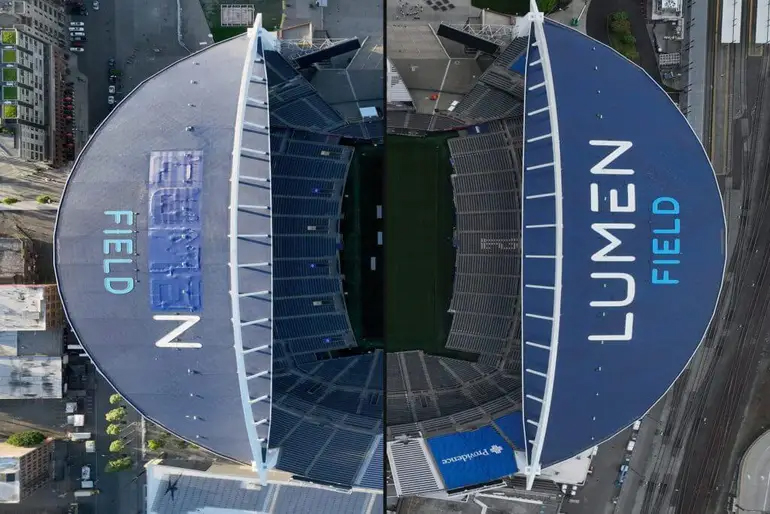
Leading the pack
The simple answer is by having great branding already. A perfect illustration of this is what happened when the Levis logo in Santa Clara, CA (where the 49ers typically play) was covered up by a white tarp to meet the requirements FIFA set for them. Whether or not Levis did it this way on purpose is debatable, but how they covered their logo did little to eliminate their brand. The silhouette of the Levi’s logo was such a unique shape that the brand shone through and was almost amplified because of the cover up. It showed the power of the brand and became a talking point rather than an overlooked piece of the stadium. The image of the covered Levis sign soon went viral and almost became a parody of FIFA and its rules.
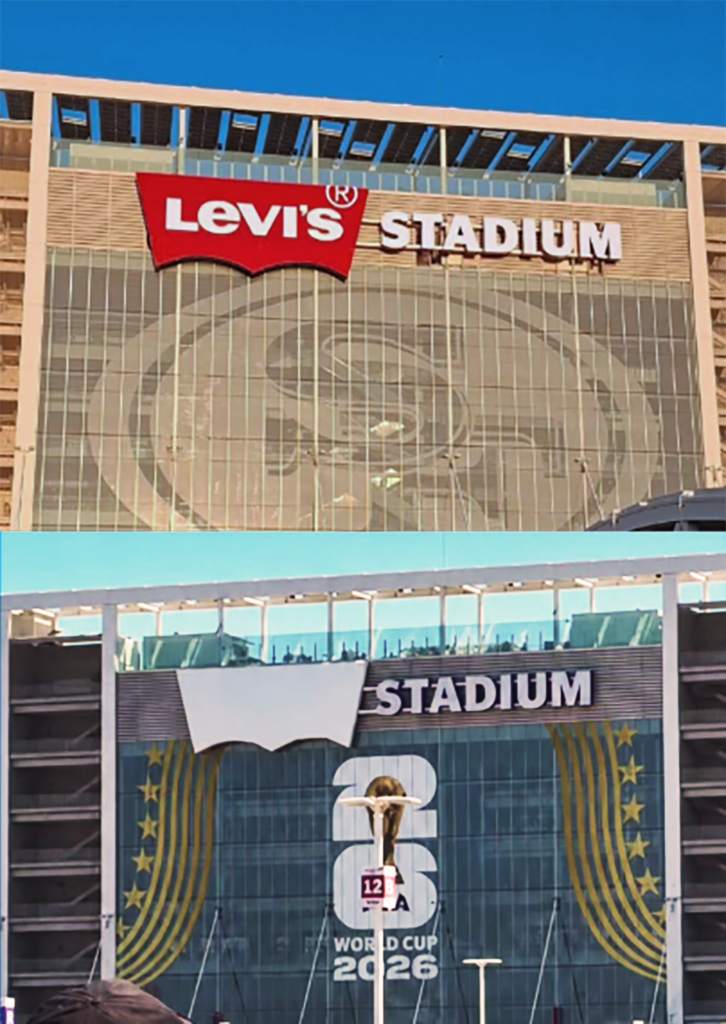
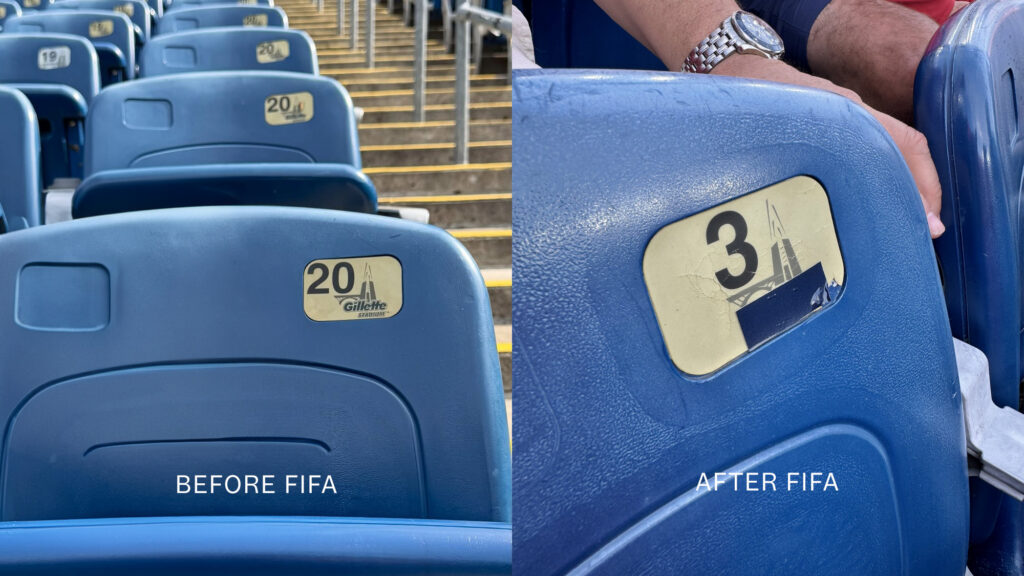
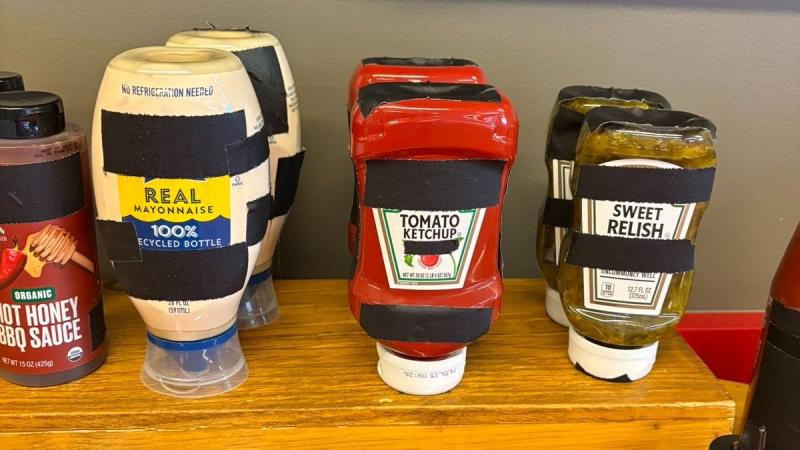
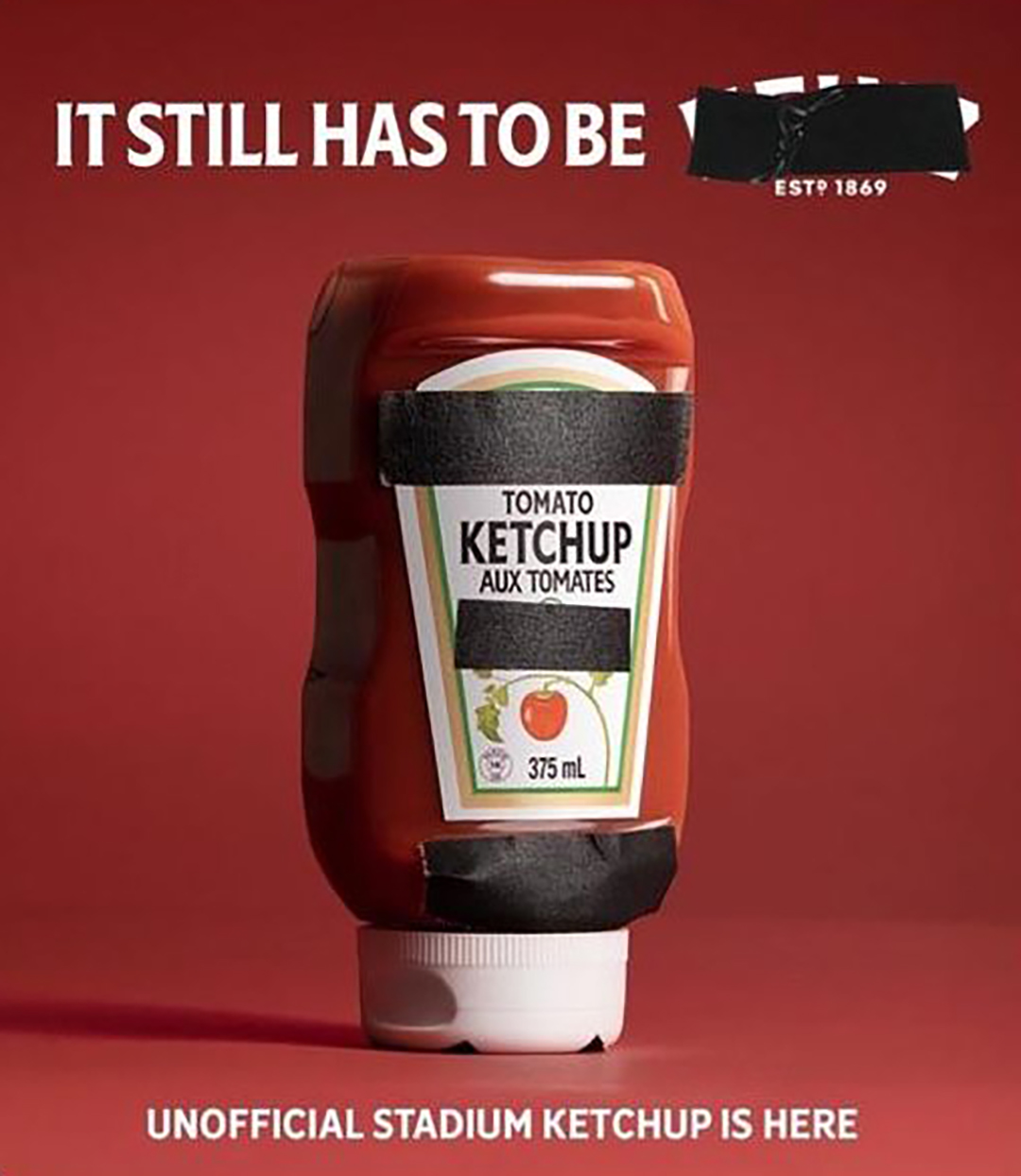
Soon after, Levis leaned into the viral moment and took it a step further by covering all their logos with a white tarp. From their flagship store front signage across the globe to the profile image on their Instagram, every logo soon got the white tarp treatment. As Levis soaked up the spotlight, other brands noticed and leaned into their own un-branding as well. Gilette Stadium covered their logo with what looks like shaving cream. Heinz ran ads claiming to be the “unofficial stadium ketchup” with black tape across their logo (what was done to actual condiment labels at the stadiums). And many other brands joined in the “fun” in one way or another.
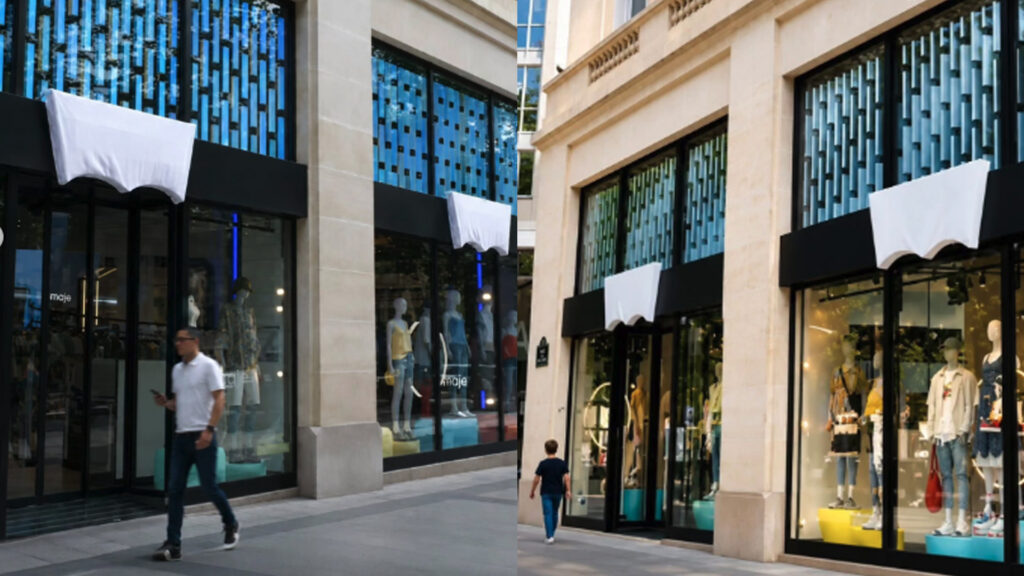
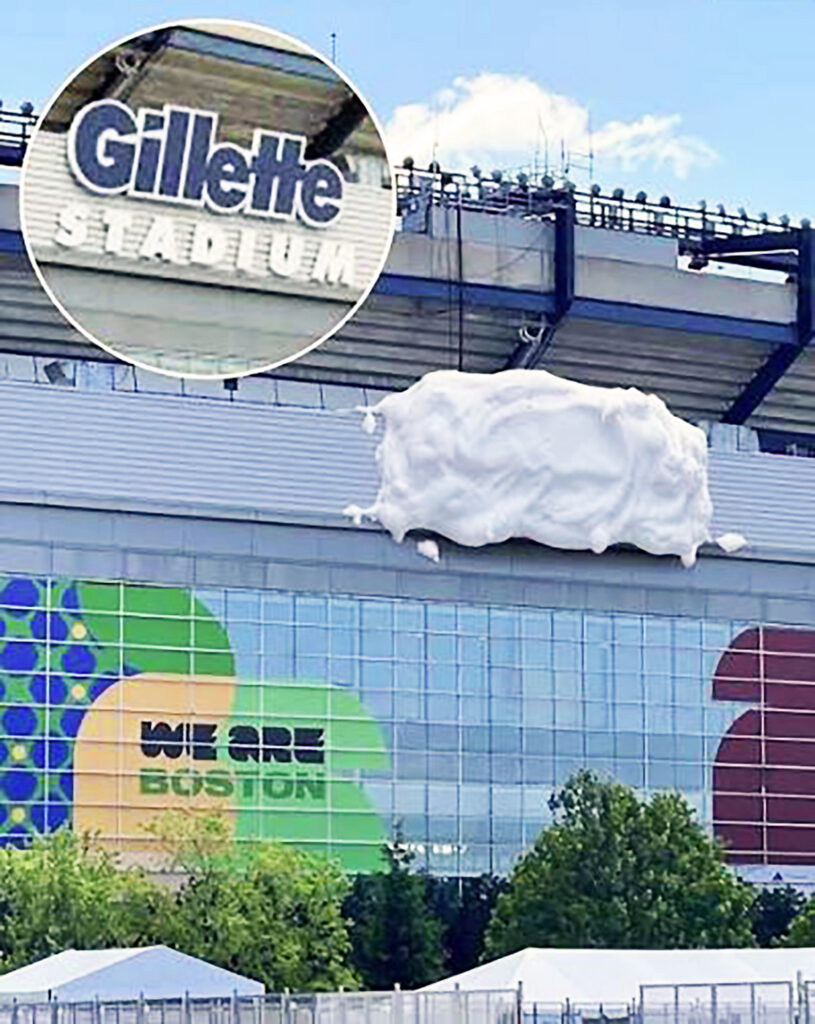
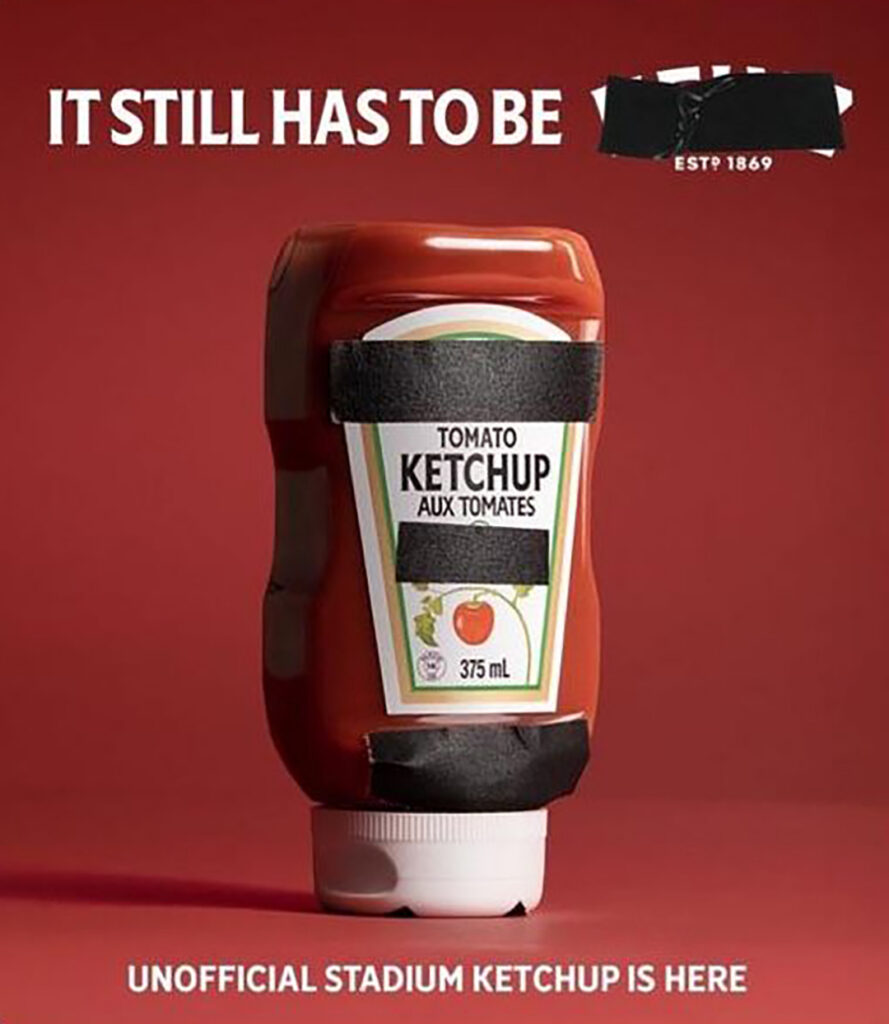
Brands that don’t even have any relation to the World Cup or sports jumped into the viral moment by tarping their logos digitally.
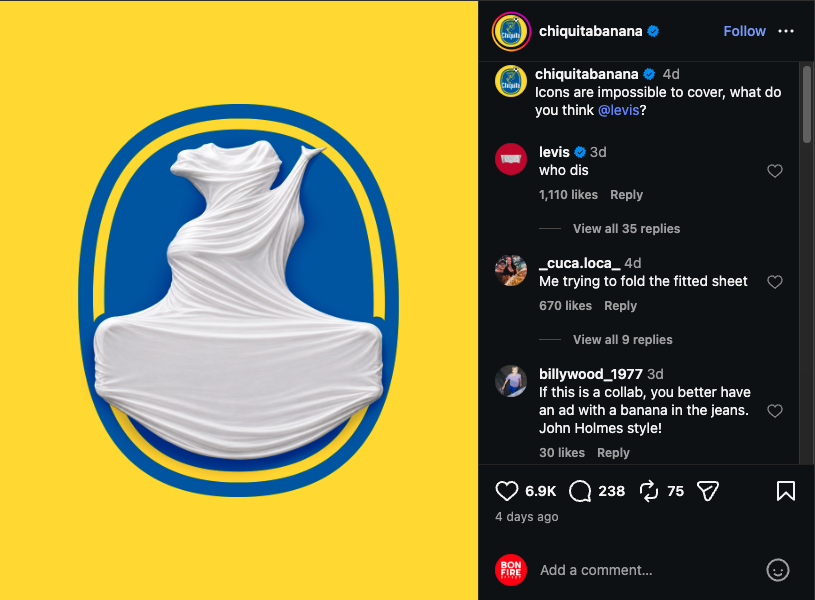
Seizing the moment
Virality is hardly a predictable phenomenon and moments like this are not something you can schedule, but there are things you can do with your brand and company to set yourself up for success when opportunities like this arise. The most important factor leading up to this moment for Levis was the immense equity already built into the brand.
The “batwing” shape of the logo was created by legendary designer Walter Landor in 1967 and has remained relatively unchanged since then. Almost 60 years to establish that shape as being synonymous with Levis brand. Consistency and repetition are branding’s best friends and Levis has executed this perfectly over those 57 years. This is why you can put a white tarp, drench it in fudge, coat it with sprinkles or do essentially anything to the surface of the Levis logo. Because the silhouette has such immense staying power and it instantly communicates “this is Levis” without anything further needed. A brand without that level of equity built into the shape of their mark could not pull something like this off, because nobody would know what it was. You sort of see that happen a little bit with the Chiquita ad above. Without the context of being on the Chiquita social media, and the blue shape behind it, I doubt anyone would know what was behind that white tarp. So Chiquita was smart in knowing how much to hide and how much to show for the audience to still understand it’s the Chiquita logo, but they pushed it right to the edge.
The secret sauce
While good branding is the foundation and fundamental to seizing the moment, it doesn’t guarantee taking off on a viral roller coaster like Levis was able to do in this instance. So what are the magic ingredients that help a brand go viral like this?
From our observations, these are some of the key factors that played a role in Levis’s viral moment coming to life:
Having your ear to the street and being on top of pop culture is so important. If nobody at Levi’s was paying attention to social media, the World Cup or any of the related buzz, then they wouldn’t have known they were catching fire and couldn’t have considered taking action to capitalize off the buzz. So being in tune to pop culture and what’s going on in the world is a must. This will also help you avoid marketing faux pas as well.
Being agile as an organization, especially in the marketing department, is key for moments like this. This likely was an accidental viral moment after the brand stood out despite the tarp being put over it, and the team was agile enough to be able to act right away and capitalize off the momentum and buzz that was being generated organically. So being able to throw gasoline on the fire that’s already burning is such an important thing. If your company has too much red tape blocking marketing initiatives, this is a good reason to re-evaluate your processes so you can act quickly to implement ideas in a way that keeps them chronologically relevant.
Don’t take your brand too seriously or be too precious with it. Levis, Heinz, Gilette and all the brands that hopped on the brand-wagon leaned into the levity and ridiculousness of the whole situation. As a result, it made them look good. They took what could be perceived as a negative (covering up their logos) and spun it into a positive. They were “good sports” when faced with some adversity. Of course, there are times to take your brand seriously, but moments like this are not those occasions.
Push the idea as far as it can go. Levis could’ve stopped at the one instance of the covered-up logo in the stadium. But instead, they covered their logo across all touchpoints, therefore making people even more aware of the strength of their brand. If you didn’t hear about the stadium but saw the logo covered up on a storefront, it probably made you curious enough to look up why the logo was covered up. Pushing the idea to other channels invites your customer base into the story even more. So instead of blocking people from the brand with a tarp cover, you’re inviting them into it. Levis did a really great job of writing strong copy to go along with their response by sarcastically assuming people couldn’t find or recognize their brand, perfectly emphasizing how recognizable it actually is.
FIFA fumbled
In the end, FIFA’s policies and attempts to make non-sponsor brands invisible had the opposite effect. In a brand-saturated world, we’ve become numb to the over-abundance of logos, so on their own they don’t stand out anymore (with rare exceptions). By giving these brands new and unique treatments in an effort to nullify their power, FIFA helped them gain prominence and go viral. And the lesson we as marketers and creatives can take from this is that if your brand has a legacy of strong equity, you can bank off that and use it to your advantage in the same way you can use the equity of your house to get a loan. If you build your brand with intention, consistency, and purpose, you can use those years of work to your brand’s advantage, whether some giant powerful organization wants to cover you up or not. Good branding permeates even the thickest of tarps.
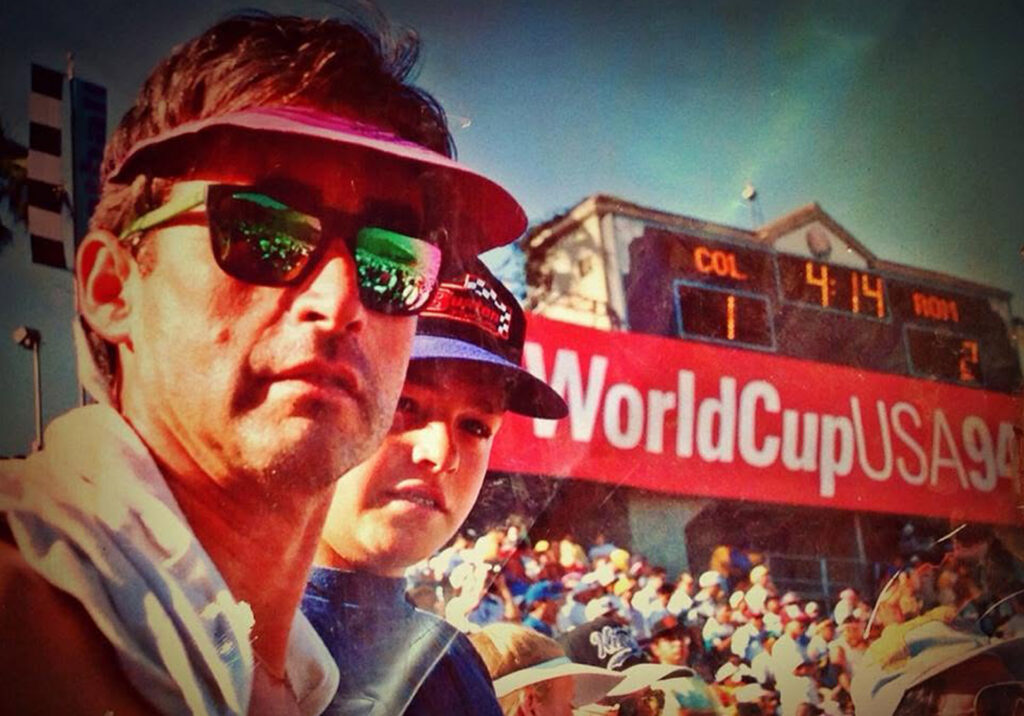
p.s. Our senior designer has been paying attention to what FIFA has been doing for quite some time. Paul was lucky enough to attend the 1994 World Cup with his father.